
Can You Ever Get a “Zero” Power Bill with Solar?
For many homeowners, opening the electricity bill each month is an unpleasant ritual. Rising tariffs, unpredictable surcharges, and seasonal spikes can make your monthly expenses feel out of control. That’s why one question comes up often: can you ever get a zero power bill with solar?
The short answer: yes, it’s possible, but only under the right setup and understanding of how solar billing works. Whether you live in a standalone home or an apartment, solar energy gives you a direct path to reduce your electricity bills drastically. And with new models like Digital Solar, even people without rooftops can now aim to get a zero power bill with solar.
The Reality Behind a “Zero” Electricity Bill
Let’s start with the basics. Most homes that install solar panels experience a major reduction in their monthly bills, but to get a zero power bill with solar depends on two main factors:
- How much solar energy your system generates
- How much grid power you still consume.
If your solar system produces as many units as you consume, your net payable amount to the utility can drop to zero, sometimes even resulting in negative bills or credit balances. But to achieve this, you need to carefully balance system capacity, energy usage patterns, and the state’s net metering policies.
How Your Solar System and Billing Work Together
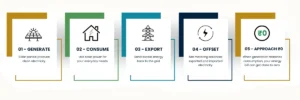
To understand how you could get a zero power bill with solar, you need to see how your energy flows through the system. Here’s the simple version:
- Solar panels generate electricity during the day
- You use that energy to power your home directly
- Any extra electricity is exported back to the grid
- At night, when your panels don’t produce power, you draw electricity from the grid
At the end of the billing cycle, your utility company nets off the energy you exported with what you consumed. If both are equal, you will get a zero power bill with solar.
The Magic Formula: Generation vs Consumption
To truly get a zero power bill with solar, your generation needs to equal your consumption. Let’s say your home uses about 400 units a month. A 3.5 kW rooftop system in India can generate roughly 420–450 units per month on average, which means your system could offset your entire monthly bill, assuming you have enough unshaded space for installation.
If you generate more than you consume, the extra energy is carried forward as a credit, depending on your local net metering policy.
What If You Don’t Have Space for Rooftop Solar?
Not every home has the luxury of open rooftops. Urban residents often live in apartments or rental homes where installation isn’t possible. This is where Digital Solar becomes the smarter choice. Instead of installing panels physically, you can reserve capacity from a remote solar plant managed by SundayGrids. The energy produced from your reserved share is credited directly to your electricity bill every month.
So even if you live in a high-rise or rent your home, you can still get a zero power bill with solar through digital participation.
When Solar Can Bring Your Bill Down to Zero
There are several situations where solar can truly cancel out your electricity costs:
- Optimized system sizing : when the solar system size is designed perfectly for your energy needs
- High daytime usage : if most of your power use happens during the day, you’ll consume more of your own solar energy
- Efficient appliances : when your home is equipped with energy-efficient devices, the same solar setup offsets a higher percentage of usage
- State subsidies and net metering : in states offering subsidies or favorable feed-in tariffs, your payback and savings multiply
The Role of Net Metering in Achieving Zero Bills
Net metering is the mechanism that enables most solar households to achieve zero or near-zero bills.
Here’s how it works:
- When your system produces more energy than you consume, the excess flows back to the grid.
- Your electricity meter records these exports.
- The utility subtracts the exported units from your imported units; you pay only for the difference.
If you exported more than you used, the extra units are carried forward, reducing future bills.
Why “Zero Bill” Might Not Mean “Zero Charges”
Even if your solar system offsets 100% of your energy consumption, some minor fixed costs might still remain, things like meter rent, connection fees, or government taxes.
These charges usually range between ₹50–₹200 per month, depending on your DISCOM. So, while your energy component can hit zero, your total bill may still show a nominal balance.
That said, these fixed costs are minimal compared to your overall monthly savings.
How Digital Solar Helps You Reach Zero Bills Without Installation
If rooftop space is your limitation, Digital Solar eliminates the barriers. You simply select how much capacity you want, say, 2 kW, and SundayGrids allocates that portion from an existing solar farm.
The energy generated is automatically credited to your electricity account, effectively reducing your bill to zero over time. It’s the easiest way to go solar without space or upfront cost.
Realistic Expectations: How Close to Zero Can You Get?
Let’s be honest, getting a perfect zero every month can fluctuate based on :
- Weather conditions (monsoon months see reduced output)
- Seasonal variations in your power usage (fans vs. heaters)
- Maintenance and panel efficiency over time.
However, most solar-powered households in India can easily get a zero power bill with solar or close to it, offsetting 80–100% of their energy bills across the year.
Can You Get a Zero Power Bill with Solar in Apartments?
Yes, but not through rooftop setups.
If you live in an apartment complex, your society can install a shared solar plant on the terrace or open land. The generated energy is divided among residents based on individual consumption. Alternatively, you can participate in Digital Solar, reserving power capacity offsite for your own home.
Either way, you’re producing clean energy and reducing your grid reliance to almost zero.
Breaking Down the Savings
Let’s put this in numbers. If your monthly electricity bill is ₹2,000, a 2 kW solar setup can offset around 240–300 units per month, roughly matching your consumption. Depending on your state tariff, that’s ₹1,800–₹2,200 worth of power generated monthly.
Over a year, that’s ₹20,000–₹25,000 saved, which is what it actually takes to get a zero power bill with solar at this scale, and your payback period drops below 5 years. After that, your electricity is practically free.
Steps to Get a Zero Power Bill with Solar
If you’re planning to go solar, here’s a quick checklist to move toward zero billing:
- Audit Your Energy Use: Know your monthly average consumption.
- Choose the Right Solar Capacity: Oversize slightly to cover seasonal dips.
- Opt for Net Metering: Make sure your DISCOM supports it.
- Monitor Performance: Use smart metering or app-based dashboards.
- Clean Panels Regularly: Keep output optimal with minimal maintenance.
Why SundayGrids Makes Zero-Bill Solar Possible
At SundayGrids, we’re making solar for everyone possible, not just homeowners with rooftops. Through our Digital Solar model, you can invest in or subscribe to solar capacity from shared solar plants and watch your bills shrink automatically.
It’s solar made simple, with no installations, no maintenance, and no space barriers.
Conclusion
So, can you ever get a zero power bill with solar? Yes, whether through rooftop or Digital Solar, you can offset 100% of your power consumption and bring your electricity cost down to almost zero. Solar doesn’t just save money, it gives you control over your energy future. And with SundayGrids, achieving a zero power bill with solar is no longer a dream, it’s just smart energy planning.