Electricity Bill Charges Explained: How Power Reaches Your Home and What You’re Paying For
Most people never think about where their electricity comes from or why their bill looks the way it does. You flip a switch and power shows up. Then once a month, a number arrives that you are expected to just pay. This post pulls back the curtain on both halves of that process. It covers how power reaches your home, and electricity bill charges explained in plain terms, line by line.
How Electricity Reaches Your Home
Electricity starts at a generating station. In India, that’s still mostly coal-fired thermal plants, though nuclear and hydroelectric contribute a meaningful share too. Each type works differently. Understanding this is the first step to having your electricity bill charges explained.
Coal plants burn fuel to make steam. The steam spins a turbine connected to a generator. That spinning motion produces electricity through electromagnetic induction. Nuclear plants use the same turbine principle, but with heat from a nuclear reaction instead of combustion. They are highly efficient but expensive to build. Hydroelectric plants skip the heat step entirely. Flowing water spins the turbines directly. This makes them cleaner but limited to areas with the right rivers or terrain.
India currently runs 22 operating nuclear reactors across 7 power plants. Their combined installed capacity is 6,780 MW. That is a small fraction of the country’s total generation compared to coal.
From Generating Station to Regional Grid
Once electricity is generated, it doesn’t travel straight to your house. It first feeds into one of India’s regional grids, originally organized as five separate regional frameworks. These were Northern, Eastern, Western, North Eastern, and Southern. These regional grids exist to move surplus power between states within the same region. Knowing this route is the first step to getting your electricity bill charges explained.
Over time, these regional grids were synchronized into a single national grid, which lets power move more efficiently from resource-rich areas to areas with heavier demand, rather than each region being stuck with only its own generation capacity.
The Central Electricity Regulatory Commission, or CERC, oversees this inter-state movement. Its role includes regulating inter-state transmission, setting tariffs for that transmission, licensing transmission companies and electricity traders operating across state lines, and generally keeping the system transparent for everyone involved.
From State Grid to Your Home
From the regional grid, power flows into your state’s grid. Next, it moves into local distribution networks that reach homes and businesses.
This is where your connection type starts to matter. Whether you’re on a high tension or low tension connection affects how your bill gets calculated later. So does the consumer category you fall under.
What’s Actually in Electricity Bill Charges Explained Line by Line
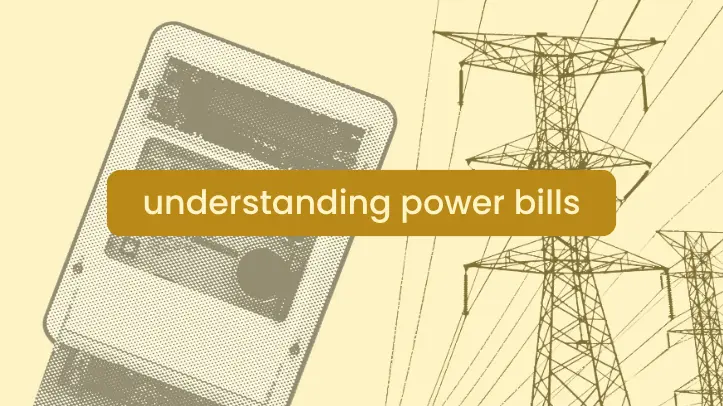
This is usually where people get genuinely confused, so here’s electricity bill charges explained the way they actually show up on a typical statement.
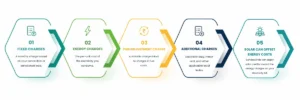
- Fixed charges: A flat monthly amount tied to your sanctioned load or connection type, charged regardless of how much electricity you actually use that month.
- Energy charges: The actual per-unit cost of the electricity you consumed, usually billed on a slab basis where the rate increases as your consumption crosses certain thresholds.
- Fuel Adjustment Charge (FAC): A variable surcharge that reflects fluctuations in the cost of fuel used to generate your power. When coal or gas prices rise, this charge rises with them, and it can shift from month to month even if your usage stays flat.
- Additional charges: This bucket covers things like electricity duty, meter rent, and other local levies that vary by state and DISCOM.
Your consumer category (residential, commercial, industrial, or agricultural) and whether you’re on a high tension or low tension connection both shift which slab and which rate structure actually applies to you, which is part of why two households using identical units of power can still end up with noticeably different bills.
Why This Matters Beyond Just Reading Your Bill
Understanding electricity bill charges explained this way makes it easier to act on a high bill. You can accept it less passively. Energy charges scale with slab thresholds. So you can see where your usage pushes you into a pricier bracket. Fixed charges apply no matter what. That is why a bill never drops to zero, even with minimal usage.
This is also where digital solar fits in. Platforms like SundayGrids apply credits directly against your energy charges, the usage-based portion of your bill, by crediting your account for electricity generated through a reserved share of solar capacity elsewhere. It doesn’t touch the fixed charges, since those exist regardless of consumption, but it directly reduces the line item that usually makes up the largest share of what you owe. If you’re curious how close that can actually get you to zero, we’ve broken that down separately.
Conclusion
Once you see electricity bill charges explained alongside how power reaches your home, bill shock makes much more sense. It also becomes clearer what to do about it. The generation and grid side is mostly out of your control. The charges themselves, especially the usage-based ones, are something you can influence. You can do that through efficiency habits or by offsetting consumption with SundayGrids’ solar credits.