
6 reasons your Power bill is going up
Most of us likely don’t give a lot of consideration to our power bills. Your utility sends it, you pay it, and afterwards you forget about it until the following month. However, out of nowhere you notice that your bill has jumped up or even doubled, and you’re left wondering why power bills are high all of a sudden.
The current high prices for coal and gas are not the consequence of a single shock event on either the demand or supply side. Rather, they are the product of a mix of supply and demand forces that steadily tightened markets over several months, if not years. In 2014-2015 and then recently in 2020, commodity prices for fuels dropped, as a result of which investments in oil and natural gas declined. This has made supply more sensitive to the kinds of extraordinary situations we are witnessing today.
Apart from the increase in tariffs for every unit of power we use, the other factor behind why power bills are high is that we are generally using more power day by day. While we can’t easily manage geopolitics or lower tariffs, what we can do is manage how much power we end up using daily.
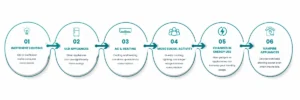
The first step is figuring out why your bill has jumped. Here are 6 typical reasons why power bills are high, and what you can do about each one. Knowing these makes it much easier to tell which part of your bill is actually in your control.
1. Not the Right Kind of Lights
Nowadays, you have a pretty long catalog to choose from when it comes to buying light bulbs: incandescent bulbs, halogen bulbs, CFLs, LED bulbs, and smart bulbs. Not all bulbs work the same or use the same amount of power.
- Next time you’re buying a lightbulb, look for ENERGY STAR-certified LED lights (in fact, for any appliance)
- These bulbs have been tested against strict efficiency standards
- Switching can help bring down your power bill quite a bit
2. Old Appliances, Old Woes
Older appliances are less efficient than newer machines, which directly affects your energy bill. Newer, efficient machines use somewhere between 10-50% less energy than their less-efficient counterparts. But that doesn’t mean you need to go out and replace them right away.
- Ensure periodic maintenance of your refrigerator and AC units
- Keep everything working in top-notch condition to avoid unnecessary power draw
3. Air Conditioners and Space Heaters
Heating takes a lot of energy, and so does cooling. The way you manage your indoor climate can raise or lower your electric bill. When outside temperatures change, the go-to approach for most of us is to climate control our indoors to be as warm or cool as we’d like.
- We tend to overuse air conditioners
- Regulating your entire room is a fairly wasteful way to keep just your body warm
- For each degree you raise your AC’s set temperature, you can save around 6% on your energy bill
- Whenever you’re cold, try an extra sweater instead of switching on the heater
4. Your Social Life and Your Electric Bill
Beyond decorative lights during Diwali or Christmas, there are times in a year when you host gatherings. You cook somewhat more, have lights on in more rooms, and stay up later than usual, leaving lights, fans, and the dishwasher running longer.
- More guests usually means a bigger electric bill
- This isn’t necessarily something to worry about, just one more reason why power bills are high during certain months, and worth knowing
- Try more outdoor gatherings to mix things up
5. Changes in Your Energy Use
Apart from seasonal changes and festivities, there could be other explanations behind why power bills are high in a given month.
- Have you added a new gadget to your home recently?
- Adding a heater or another TV can bring about a noticeable increase in your energy bill
6. Vampire Appliances
Heading out of home, most of us switch off the lights and air conditioners to save energy while we’re not there. But that’s not all the appliances that are “online” at that moment.
- Vampire devices are things that stay connected constantly and sip power even when idle
- Think of your TV, refrigerator, WiFi router, and desktop computer
- These gadgets draw a tiny amount of energy, but constantly over long periods
- Even a phone charger left in the outlet without charging a phone still keeps draining power
- The easiest fix is to switch off most things, or lower the intensity for things like refrigerators or thermostats
- Try keeping a leaving-home checklist listing all the outlets to keep an eye on
Why Power Bills Are High Beyond Just Habits
All six reasons above matter, but they sit inside a bigger picture too. Fossil fuel markets are volatile, and since most of our grid power still comes from coal and gas, our bills stay exposed to that volatility no matter how carefully we manage our own usage. This is really why power bills are high for a lot of people even when their habits haven’t changed, the underlying cost of generating power keeps climbing. Solar is a large part of how we reduce that dependency over time.
Conclusion
Lighting, old appliances, AC and heating habits, social gatherings, new gadgets, and vampire power together explain most month-to-month jumps in your bill. But if you’re asking why power bills are high in a bigger, structural sense, it comes down to how exposed your electricity still is to fossil fuel price swings. SundayGrids exists to reduce that exposure, by letting you tap into solar savings directly through credits applied to your bill, even without a rooftop of your own.